
Waiting time becomes an operations problem
Loading and unloading delays consume driver hours, equipment capacity and the time available to complete the next load.
Freight revenue recovery for carriers
For trucking carriers in Canada and the United States. We review completed loads, prepare supported detention and accessorial claims, and charge only when you recover money.

Freight Claim Recovery helps carriers find charges missed between dispatch, paperwork and final settlement. Our focus is detention, layover, truck ordered not used (TONU), lumper reimbursement and other agreed accessorials—not shipper cargo-loss insurance claims. Learn who operates FCR and how the carrier-controlled review works.
Checking a load yourself? Use the detention pay calculator and claim-document checklist.
The problem
A driver waits. A stop is added. A lumper is paid. The charge may be permitted by the load agreement, but the evidence and billing steps are scattered across rate confirmations, PODs, receipts, emails and settlements.
Loading and unloading delays consume driver hours, equipment capacity and the time available to complete the next load.
Terms may be in the rate confirmation, times on the POD, approval in email and payment status inside a settlement or factoring workflow.
Without a disciplined review and follow-up process, charges can remain unbilled, unsupported, denied or invisible to the carrier.
Industry context
U.S. industry research shows how often drivers are delayed and how difficult it can be for fleets to turn detention invoices into collected revenue.
Source: American Transportation Research Institute, 2024. U.S. research is provided as industry context; individual carrier outcomes vary.
What we review
The first reviews prioritize recent, clearly documented detention. The same process can identify other accessorial revenue when the governing agreement and evidence support it.
Waiting beyond the agreed free time at pickup or delivery.
Extended delays or a truck ordered and dispatched but not used.
Lumper reimbursement, extra stops, driver assist and redelivery.
Differences between documented agreed charges and the final settlement.
Simple by design
No integration project. No new carrier software. Start with a small review and the records you already keep.
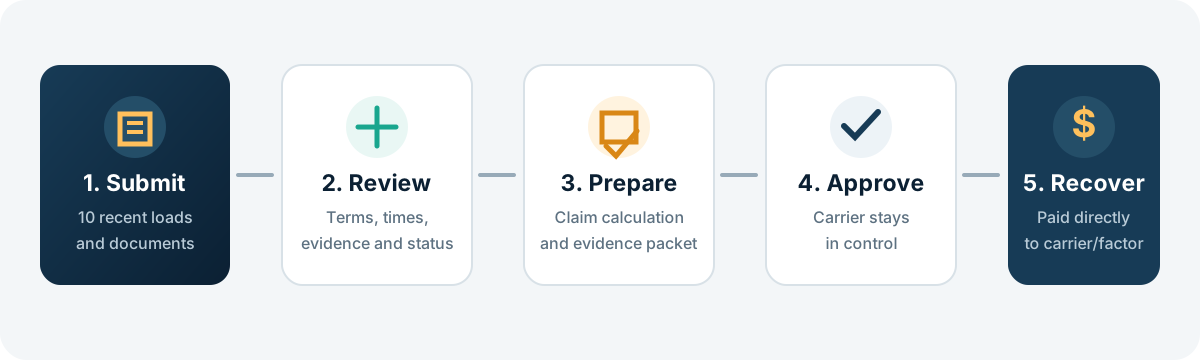
Illustrative example
The actual claim depends on the rate confirmation, documented times, notice requirements, submission deadline and counterparty approval.
Built around control
Freight Claim Recovery is designed as an administrative review and claim-preparation service. The carrier keeps control over the claim and the money.
We prepare the calculation and evidence package for carrier review before submission.
The broker pays the carrier or its normal factoring company directly.
If a required timestamp, approval or document is missing, the file is marked incomplete.
Contract terms, evidence, deadlines and the counterparty ultimately determine payment.
Start with a small test
We will review the available rate confirmations, PODs/BOLs and supporting records, then tell you which loads may contain supportable detention or accessorial charges.